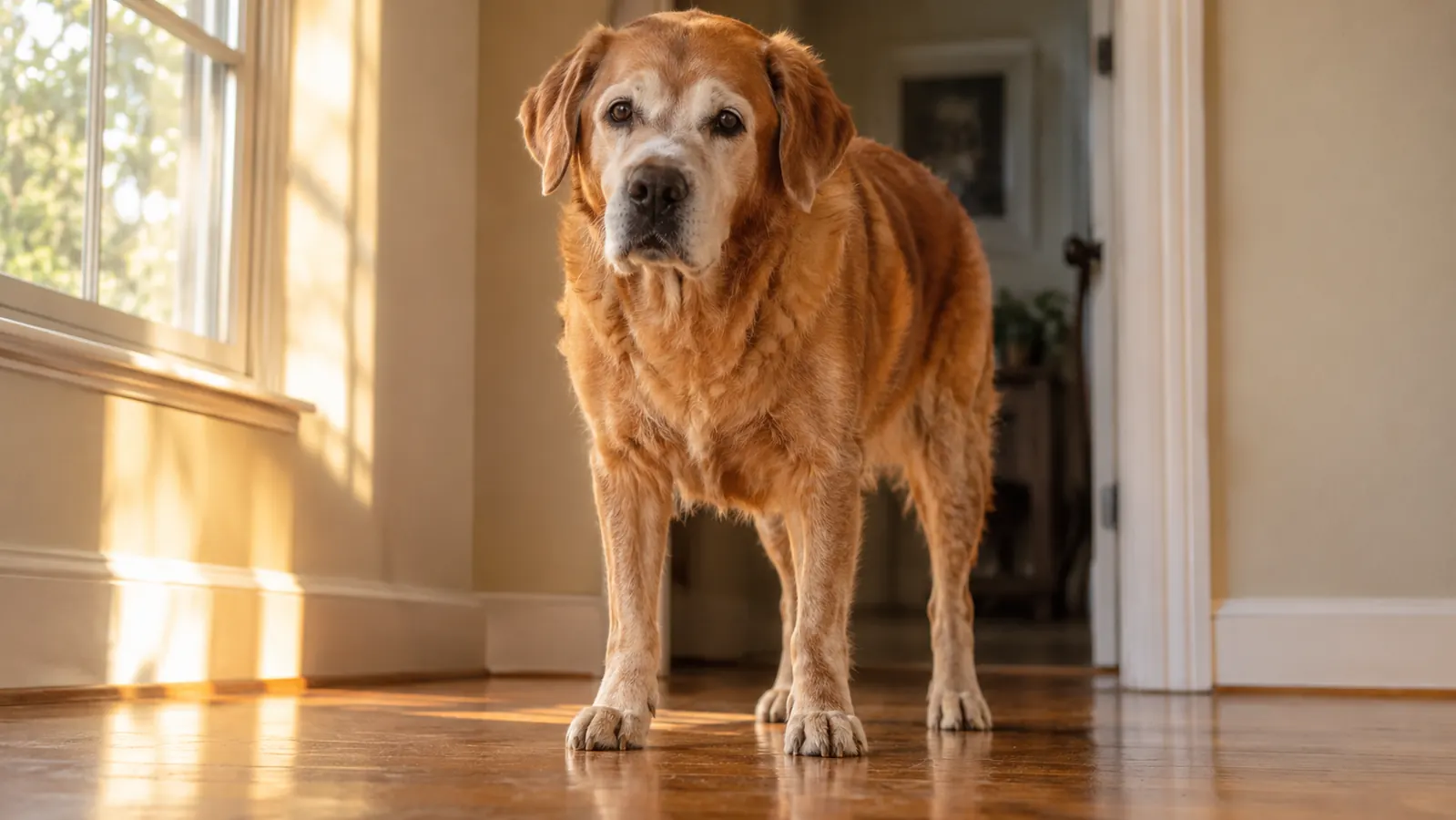
Eleven months ago I pulled a set of dog socks onto an eleven-year-old yellow Lab named Waylon and watched him high-step across my kitchen floor like the boards had turned to ice. He was not hurt. He was not even annoyed. He was confused for about ten minutes, and then he walked to his water bowl and got on with his morning. That part is normal and most reviews mention it. What goes unmentioned is the Tuesday in month seven when you are on your knees at twenty to seven with your coffee going cold, re-seating a back sock that has twisted halfway around a paw for the second time that week. That is the honest part of owning these, and it is the part I want to spend this page on.
I am Nadine, a retired school bus dispatcher in St. Charles, Missouri, and I have had big dogs for most of my life. I am not a vet, a vet tech or a trainer, and nothing here is medical advice. I am telling you what I saw in my own dog and nothing else. The socks are DOK TigerToes, size Large, a set of four, bought in December 2025 after his back legs slid out from under him on that same kitchen floor two months earlier. I still put them on him every single morning, and I expect I will keep putting them on him. I am also going to tell you the parts I do not love, because the parts I do not love are the reason you might decide not to buy them.
The Quick Verdict
Real grip where it counts and a routine you have to keep up with. The front socks stay put and the back two twist most afternoons.
Amazon Check Today's Price →The Number That Decides Everything Is a Paw Measurement
Size Large fits paws 2.5 to 2.8 inches, measured across the widest part of the foot while the dog stands on it. Get that wrong and nothing else on this page matters.
Amazon Check Today's Price on Amazon →What the Listing Says, and What It Leaves Out
Here is what the DOK listing states, and every bit of it holds up against what actually arrived. Four socks per set. Size Large fits paws measuring 2.5 to 2.8 inches. Cotton and nylon, machine washable, hook and loop closure with a pull-on fit as well. A grip built into the underside of the sock, which the brand describes as an extra-thick grip engineered to keep working even when the sock twists. Those are their words, not mine. The socks measure seven inches by three inches by a quarter inch and weigh about three and a half ounces apiece, so four of them take up less drawer space than a pair of winter gloves.
One thing the listing does not tell you is how that twist business plays out across months. In this house it plays out like this. The front two socks stay where I put them. The back two do not. By three or four in the afternoon one or both of the back socks has rotated enough that the grip has slid around toward the side of the paw, and I crouch down and spin it back where it belongs. The grip does still give him something under the pad even when it has shifted, which is what DOK said it would do, but the sock is no longer covering the way it was at breakfast. Eleven months in, that is the most useful thing I can hand you.
The listing also mentions paw protection and discouraging licking, and there I have to be careful with you. Waylon has never been a paw licker, so that part I cannot speak to from experience and I am not going to pretend I can. What I can tell you is that the socks have kept his pads off the hardwood for roughly fifteen hours a day for eleven months, and I have not found a worn spot on the fabric or a red mark where the strap sits. If your dog is a licker, that is a different question and one you should take to your vet rather than to me.
One thing the listing is careful about, and I will be too. These are socks for a floor. They do not fix a dog's joints, they do not change what is happening inside a leg, and I will not pretend otherwise. If your dog is slowing down, the first call is to your veterinarian, not to a listing. I asked Dr. Reyes at our regular clinic before I put anything on Waylon's feet, and I would ask again.
The Size Chart Is a Paw Measurement, Not a Dog Size
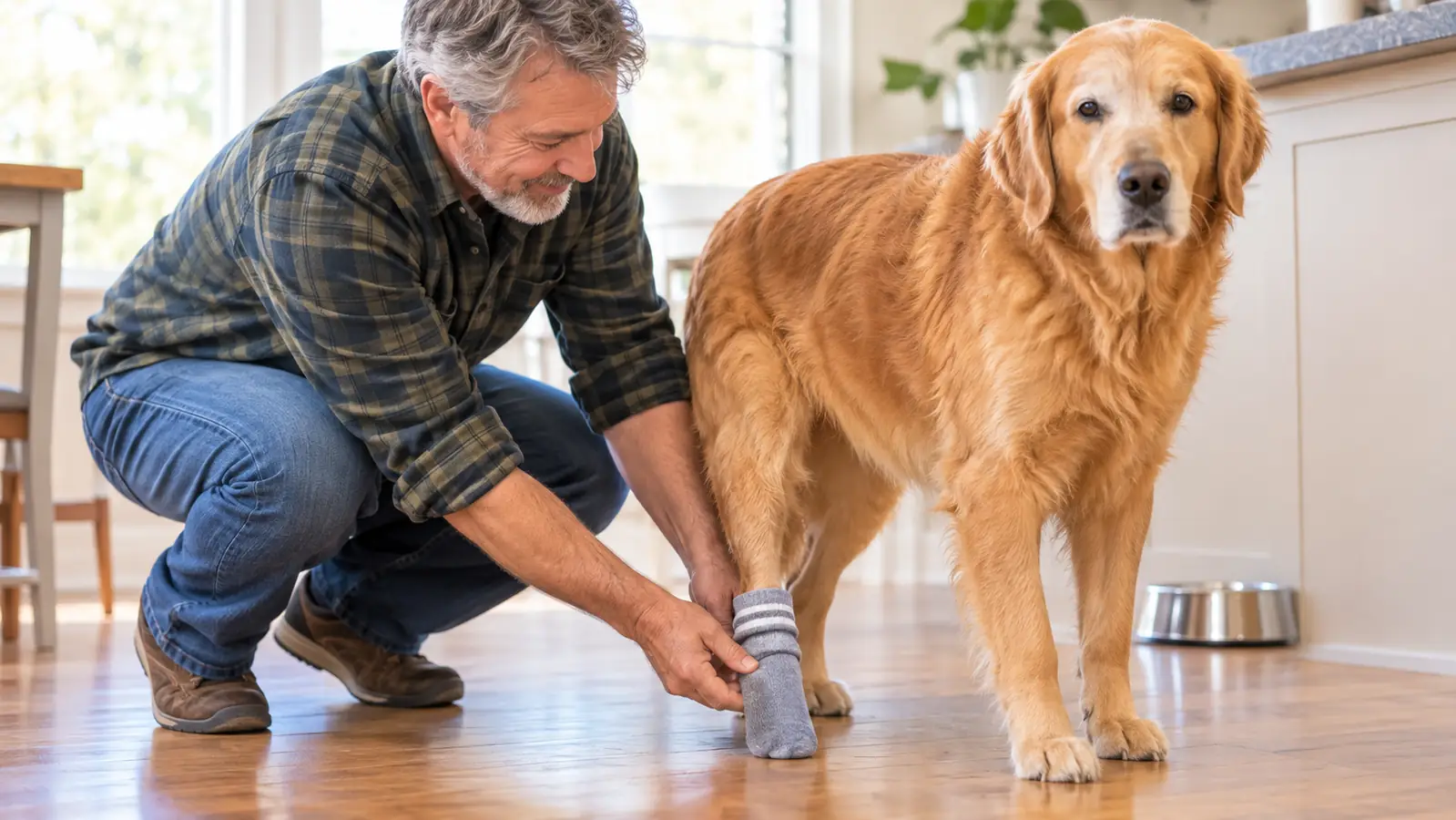
This trips people up and it nearly tripped me up. Large does not mean large dog. It means a large paw, measured across the widest part of the foot while the dog is standing with his weight on it. Waylon is 68 pounds, which most folks would call a big dog, and his paws land inside that 2.5 to 2.8 inch window, so Large was right for him. I measured him with a tape on the kitchen floor on a Saturday morning, three separate times, because I did not want to guess and I did not want to box anything back up.
The hook and loop strap is what actually holds the sock in place, and it sits above the paw, around the ankle. That is also where the fit works or fails. Too loose and the sock walks itself off inside an hour. Too tight and you will see it, because the strap will leave a mark. I check Waylon's ankles every night when the socks come off. In eleven months I have never found a mark, but I set that strap the same way every morning and I look, every night, without fail.
There is a pull-on option as well, so the strap is not compulsory. I use the strap on the back two and pull the front two on snug, which is a habit rather than a recommendation from anybody. Try both ways on the first day and see what your dog tolerates. Waylon tolerated all of it and objected only to those first ten minutes on the first morning.
What Eleven Months of Mornings Actually Looks Like
The routine in this house is fixed. Socks on after breakfast, around 6:30. Socks off at bedtime, around 9:30. Fifteen hours a day, every day, on the hardwood in the hallway, the kitchen and the living room. He does not wear them outside and he never wears them on the block. When we go out the back door and down the three wooden steps to the yard, the harness does that work and the socks stay inside. That has been the arrangement since December 2025 and it has not changed once.
The first morning he high-stepped. I have heard people call that a sign the socks are wrong. In our case it was not. He was working out that his feet felt different. He had stopped by the third morning, and now he stands at the end of the kitchen waiting for me to finish, which is either patience or resignation and I could not tell you which. He has never once tried to chew them off, and I fully expected him to.
The back socks twist. I want to say that plainly, because eleven months in it is what I would most want to know. Most afternoons I re-seat at least one of the back two. It takes five seconds, it does not hurt him, and it does not stop me using them. But it is a job, and if you are not going to do it, the grip is going to spend half of every day pointing the wrong direction. The front two have never been a problem, not once.
The Floor, and What I Actually Saw
In October 2025 his back legs slid out from under him on the kitchen hardwood one morning while he was turning toward his bowl. He got up. He was fine. But the same week he stopped at the back of the CR-V and looked at me instead of jumping in, and I knew something had changed in how he moved. That is the whole story of how any of this started. He got stiff. He got slower. He is an old dog. Nothing was named and I did not name it, and Dr. Reyes is the only person who gets to say what is going on inside him.
What I have seen since December is this. His back legs have not slid out from under him on that kitchen floor the way they did in October 2025. He crosses the hardwood with less hesitation than he did last winter. That is my observation of my own dog across eleven months and it is exactly as far as I will take it. It is not a promise about your dog and it is not a medical result. I cannot prove the socks are the reason rather than the glucosamine he takes with breakfast, or the bed he sleeps on, or simply a good stretch of months for an old Labrador. He is still slower than he was two years ago. Nothing fixed him.
That ambiguity is worth sitting with, because plenty of reviews will not let you sit with it. When you put one thing on a dog and he does better, you want to credit the thing. I have bought five things for Waylon now, one at a time and months apart, and I genuinely cannot tell you which is doing what. What I can tell you is which one is on his feet fifteen hours a day, and that one is the socks.
What I Liked
- The grip still sits under the paw after a back sock rotates
- Came through eleven months of Sunday machine washes without the grip loosening
- Four socks means a spare pair is ready while the others dry
- The hook and loop strap has never left a mark on his ankles
- He stopped noticing them by the third morning
Where It Falls Short
- The back two twist and need re-seating most afternoons
- Large is a paw measurement, not a dog size, and it is easy to get wrong
- They collect lint and dog hair faster than you would expect
- Four small socks is four small things to lose
- No help at all on the three back steps or out in the yard
The grip still gives him something under the pad after a back sock has rotated. The sock no longer covers the way it did at breakfast, and that is the honest trade.
Washing Them, and the Small Annoyances
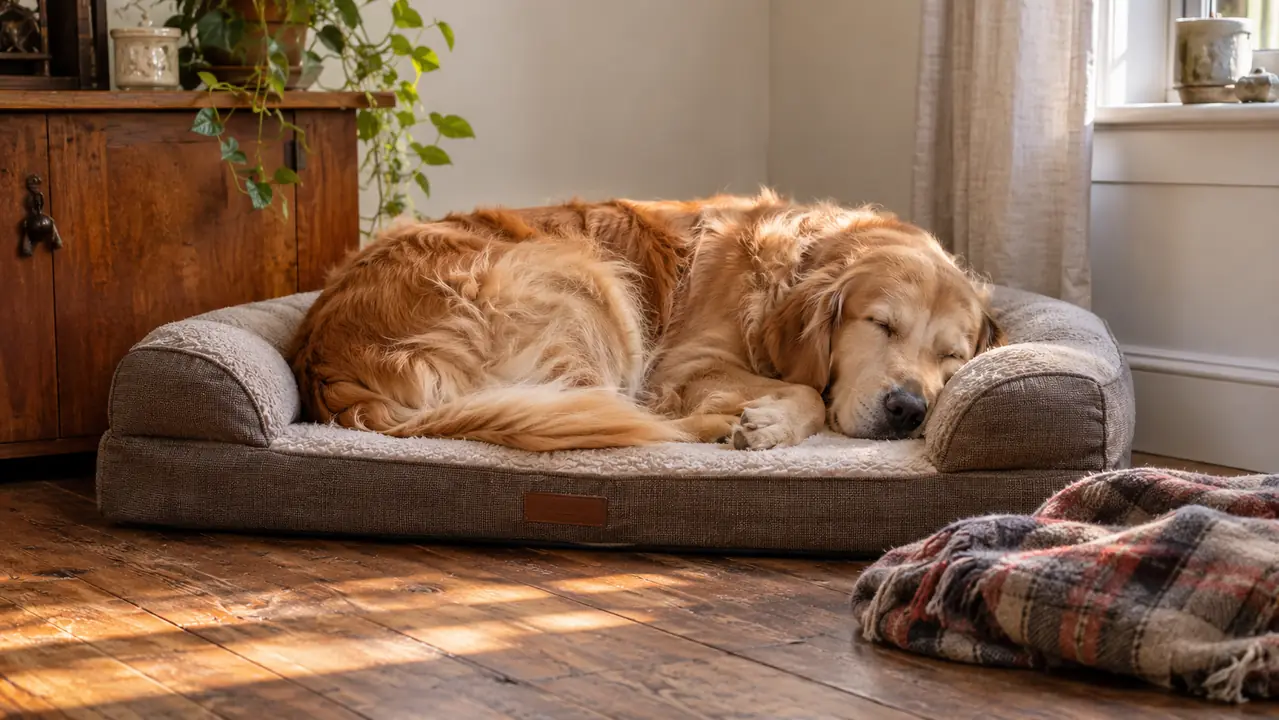
The DOK socks go in the machine on Sundays with the rest of the wash. The care instructions say machine wash, that is all I do, no mesh bag and no special soap, and eleven months of Sundays has not loosened the grip or softened the strap past use. I let them air dry on the counter because I would rather not find out what a hot dryer does to them. Four socks means there is a spare pair ready while the others dry, which sounds like a small thing and is not.
The annoyances are small but I will list them. Four socks is four things to lose, and they are small enough to sit under a chair for a week before anybody notices. They collect lint and dog hair faster than you would expect, and by Friday they look worse than they are. The back two twist. And if you have a dog who hates anything on his feet, the first three days will be a negotiation. I can tell you how it went in my house and nowhere else.
What These Socks Do Not Do
They do not replace the harness. They do not replace the ramp. They do not replace a conversation with your vet. If your dog is struggling on steps, socks on a hardwood floor solve a floor problem and nothing more, and it took me a while to understand that those are separate jobs with separate tools. In this house the socks are for the hallway and the kitchen and the living room. The harness is for the three back steps and for bad days at the car. The ramp is for the CR-V and only the CR-V. Nothing here is interchangeable with anything else, and a sock that promises to do all of it is a sock that is lying to you.
Who This Is For
This is for the owner of an older dog who lives on hardwood and has watched that dog lose confidence on it. If your dog hesitates at the kitchen doorway, or scrambles when he turns, or gets up stiff after sleeping on the floor, socks are a small thing to try before you start rearranging your house. It is also for the owner who will actually do a daily routine, because the routine is the product. Fifteen hours on, one check at bedtime, a re-seat in the afternoon, a wash on Sundays. If that sounds manageable, these will probably do for you what they have done for us. If it sounds like something you will skip by week two, you already know your answer.
It is also for the owner who has already had the vet conversation and is looking at the practical side of daily life rather than a fix. Dr. Reyes knows about the socks and the harness and the ramp. That is the right order: the conversation first, then the gear. Anyone telling you a sock will change what is happening inside your dog's joints is selling you something, and I would walk away from that conversation.
Who Should Skip It
Skip these if your dog lives on carpet and has no reason to cross a hard floor. Skip them if your dog will not tolerate anything on his feet and you have already tried and lost that argument, because eleven months of a daily battle is worse for both of you than a couple of runners down the hallway. Skip them if you want something that works unsupervised all day and never shifts, because the back two will shift. And skip them if what you want is a solution rather than a tool, because a tool is what this is.
One last thing and then I will leave it with you. If your dog is stiff, if he is slower than he was, if he stops at the car instead of jumping in, talk to your veterinarian before you buy anything at all. That conversation is worth more than every product in my hallway put together. What is here is one woman's experience with one old Labrador across eleven months. It is not advice about your dog.
Eleven Months In, the DOK Socks Are Still on His Feet Every Morning
It is a routine, not a fix. Fifteen hours on, one check at bedtime, a re-seat in the afternoon, a wash on Sundays. If you will keep that up, these are a small thing that makes a hardwood floor easier for an old dog.
Amazon Check Today's Price on Amazon →